




Blog
Pickleball Paddle Shapes: What Elongated, Standard and Hybrid Geometries Actually Change

Quick answer
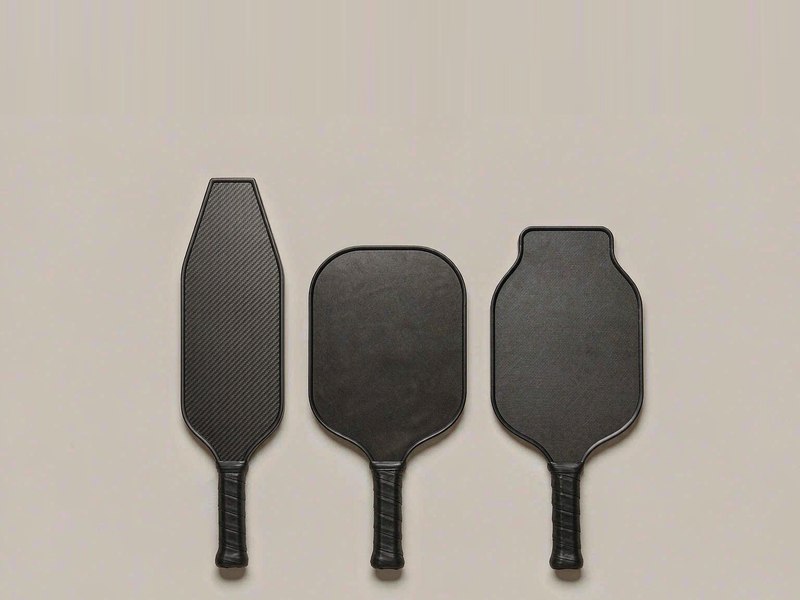
- Every paddle shape is a trade between hitting area and leverage. The rules cap a paddle at 17″ long and 24″ combined length-plus-width — every shape on the market is a different way of spending that budget.
- Standard / widebody = bigger sweet spot, more forgiveness, the right default for most players and most brands.
- Elongated / blade = reach, tip speed and drive leverage, with a narrower sweet spot shifted toward the tip.
- Hybrid shapes split the difference and now dominate the mid-premium market.
- Shape changes swing weight even at identical static weight — longer paddles carry mass farther from the hand.
- For brands: shape is your most visible spec difference. It is also the most expensive one, because shape is decided by the mold.
Shape is the first thing you notice about a paddle and the last thing most guides explain properly. That’s a problem, because shape isn’t styling — it is geometry spending a fixed rule-book budget, and it interacts with weight, sweet spot and even how a paddle ages. This guide covers the shapes, the physics behind the differences, and how shape decisions work on the manufacturing side, where they are more consequential than any other specification.
This completes the structural picture alongside our guides to pickleball paddle core types and paddle weight and swing weight. Shape is the third variable of the three.
First, the rule book — because it defines the game
Under the equipment rules enforced by USA Pickleball, a paddle may be at most 17 inches long, and its combined length plus width may not exceed 24 inches. There is no thickness limit. That is the entire design space: every paddle you have ever seen is a different answer to how to spend those inches.
Spend them on width and you get a short, wide face. Spend them on length and you get a long, narrow one. Spend them in between and you get the hybrids that now dominate the market. That is genuinely all “shape” is — which is why the differences are so consistent from brand to brand, and why shape is the easiest spec to compare across competitors.
The three families
Standard / widebody — the forgiveness play
Typically around 15.5–16″ long and 8″+ wide. The wide face puts the maximum hitting area near the geometric center of the paddle, and the sweet spot — the region where off-center hits still return well — is at its largest here. Misses toward the sides stay playable. This is why coaches start beginners on widebodies and why rental and club fleets overwhelmingly use them.
The cost is leverage. A shorter face means less reach at the kitchen and less tip speed for the same swing, so hard-hit serves and drives require more of the player. The widebody asks for less and gives less.
Elongated / blade — the leverage play
Typically 16–16.5″ long and 7–7.5″ wide, riding close to the 17″ length cap. The long face does three things: adds reach on stretched dinks and counters, raises tip speed for the same swing (which helps serve and drive pace), and moves the sweet spot up the face, where elongated-paddle players actually contact the ball.
The costs are real: the sweet spot is physically smaller, off-center hits punish harder, and — critically — mass sits farther from the hand, so the same static weight swings heavier. Many elongated players end up preferring lighter builds to compensate. This is also the shape most associated with spin-oriented play, though the spin itself comes from surface texture and swing path; the shape just makes brushing the ball easier at speed.
Hybrid / mid shapes — the market’s compromise
Typically 16–16.25″ long and 7.5–8″ wide. Hybrids keep most of the widebody’s forgiveness while adding a useful amount of reach and tip speed. That middle position is why most current mid-premium launches use hybrid geometry — it offends the fewest players, which is exactly what a volume SKU needs to do.
| Attribute | Standard / widebody | Hybrid | Elongated / blade |
|---|---|---|---|
| Typical size | 15.5–16″ × 8″+ | 16–16.25″ × 7.5–8″ | 16–16.5″ × 7–7.5″ |
| Sweet spot | Largest | Medium | Smallest, shifted toward tip |
| Reach / leverage | Least | Medium | Most |
| Swing weight at same mass | Lowest | Medium | Highest |
| Typical player | Beginners, doubles, club play | All-court players | Singles, spin-heavy baseliners |
| Return-rate risk for a brand | Lowest | Low | Highest (fit-dependent) |
Sweet spot physics — in one paragraph, without the invented percentages
You will find pages claiming shape X adds “15% more sweet spot” or “20% more power.” Treat all of it skeptically — there is no shared test protocol behind any of those figures, as we noted in our core guide. The directional physics is simpler: the sweet spot is where the paddle’s structure returns energy efficiently, and its size scales with the hitting area near the face’s structural center. A wider face puts more of that efficient region where players actually miss; a longer, narrower face concentrates it and moves it up. Nothing more mystical than that — and it is why two paddles of identical construction but different shapes play so differently on mis-hits while playing almost identically on centered contact.
Shape and swing weight are coupled. At the same static weight, an elongated paddle swings heavier than a widebody because its mass sits farther from your hand. So “16.5-inch, 8.0 oz” is not a complete specification — the same numbers on different shapes describe different paddles. When comparing paddles across brands, compare shape class first, then weight within it.
Choosing a shape — for players
- New or improving players: widebody or forgiving hybrid, without exception. Center contact first; specialize after.
- Doubles players who live at the kitchen: forgiveness beats reach in most exchanges — widebody to hybrid.
- Singles players and heavy top-spin drivers: elongated earns its costs. Just expect the sweet spot to demand better technique.
- Two-handed backhand players: check handle length alongside shape — a longer handle on a hybrid is often the better answer than a longer face.
- Smaller frames or shorter reach: the elongated’s extra reach is a genuine mobility benefit, not just a power one.
Choosing shapes — for brands (this is the expensive part)
For a manufacturer, shape is not a specification like weight or color. Shape is the mold. It is decided before the first paddle is pressed, it costs real money to change, and everything else — core fit, edge guard, face pattern, handle spec — is downstream of it. Three practical consequences:
- First line: one shape, done well. A hybrid covering the widest player base beats two shapes done thinly. Add a second shape (an elongated for the spin market) once the first model has reviews and a proven fit.
- Shape choice inherits every other decision. The same 16 mm core plays differently across shapes because of swing-weight distribution — which is why our weight guide insists weight and shape are specified together, never separately.
- Borrowing a proven geometry is normal; copying a competitor’s mold outright is not. A factory can tool a shape in the same class as any market leader (the 17/24 rule makes the dimensional envelope public). What distinguishes a factory is whether it tells you honestly what each geometry will and won’t do for your target player — that conversation is part of every Jeimor spec consultation.
Frequently asked questions
What is the difference between standard and elongated pickleball paddle shapes?
Standard paddles are shorter and wider with a larger, more central sweet spot; elongated paddles are longer and narrower, adding reach and tip speed but shrinking the sweet spot toward the tip. Everything else is a hybrid of those two trade-offs.
What are the size limits for a pickleball paddle?
Up to 17 inches long, and combined length plus width may not exceed 24 inches, per USA Pickleball equipment rules. There is no thickness limit — thickness is a performance choice, not a legality one.
Do elongated paddles actually add spin?
Indirectly — more tip speed for the same swing makes brushing easier, especially on serves and drives. The spin itself still comes from surface texture and swing path. Shape enables; it doesn’t generate.
Which paddle shape is best for beginners?
Standard or widebody. New players miss the center often, and a wide, forgiving face converts those misses into playable balls instead of errors.
Does paddle shape change swing weight?
Yes. At the same static weight, a longer shape carries mass farther from the hand and swings heavier. Shape and weight must be specified together — one never tells the full story alone.
Deciding between shapes for your first line?
Tell us your target player and price point — we will recommend a shape class, explain what it will and won’t do, and quote tooling honestly.